
China’s Unitree Robotics is heading into a major week for the company and the broader humanoid robotics industry.
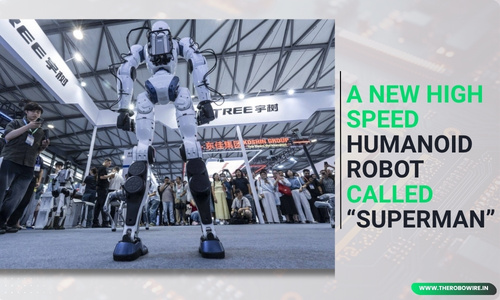
The Hangzhou based robotics maker has unveiled a new high speed humanoid robot called “Superman”, just days before it is set to begin trading on the Shanghai Stock Exchange’s STAR Market. The debut will make Unitree the first general purpose robotics company to list on mainland China’s stock market, according to Reuters.
The company raised 6.1 billion yuan, or about $905 million, in its initial public offering last week. The IPO attracted extraordinary retail demand, with subscriptions exceeding 8,000 times the available allocation, setting a record for the Shanghai STAR Market, Reuters reported.
Unitree’s stock is scheduled to begin trading on August 19, placing the company’s market debut directly in the spotlight as China showcases its growing ambitions in humanoid robotics.
Unitree Puts Speed at the Center
The newly unveiled Superman robot is designed to highlight Unitree’s progress in dynamic robotic movement.
According to the company, the robot was developed in just over three months and can reach a top speed of 12.66 metres per second. It can also perform a standing vertical jump of two metres. Unitree said the machine remains a work in progress and could see further improvements in the coming months.
The specifications are part of a wider push by Chinese robotics companies to demonstrate increasingly advanced movement, balance and physical capabilities in humanoid machines.
Unitree has already gained global attention for robots capable of running, dancing and performing martial arts movements. The company’s latest demonstration adds another layer to that strategy by putting physical performance and speed at the center of its newest humanoid platform.
The company has also built a reputation around commercially accessible general purpose robots, spanning humanoid platforms, quadruped robots and robotic components.
A Major Moment for China’s Robotics Industry
Unitree’s listing comes at a time when China is accelerating investment and development across the robotics sector.
The Shanghai Stock Exchange has described the company’s IPO as a landmark event for the emerging humanoid robotics industry. The exchange previously reported that Unitree had received regulatory approval for its STAR Market listing, making it the first humanoid robotics company set to enter the A share market.
Unitree’s prospectus describes the company as focused on high performance general purpose humanoid robots, quadruped robots, robotic components and embodied intelligence models. The company has developed its business around both hardware and the software and artificial intelligence systems needed to operate increasingly capable robots.
The company’s planned IPO proceeds are intended to support the development of intelligent robots, new robotic products and hardware, as well as the construction of an intelligent robot factory.
That manufacturing focus is particularly important as the humanoid sector moves from demonstrations and pilot programmes toward commercial deployment.
From Robot Demonstrations to Commercial Scale
The excitement around humanoid robots has grown rapidly over the past two years, but the industry is increasingly being judged on its ability to move beyond technical demonstrations.
Unitree is already operating at a scale that sets it apart from many early stage robotics companies. The company said in a social media post last week that it had produced and delivered approximately 18,000 bipedal humanoid robots across multiple models as of July.
That installed base gives Unitree an important position as it works to develop more capable systems and expand applications.
The company’s prospectus says its robots and components are being used by universities, research institutions, technology companies and developers in China and overseas. It has also positioned its products as part of a broader ecosystem focused on general purpose robotics and embodied intelligence.
The shift toward mass production could become one of the defining factors in the next stage of the humanoid robotics market. Building impressive prototypes is one challenge.
Producing thousands of reliable machines, maintaining consistent quality and bringing down the cost of deployment are considerably bigger ones.
Financial Performance Adds to Investor Interest
Unitree’s financial performance has helped strengthen the investment case around its public debut.
Data from the company’s prospectus show that revenue reached approximately 1.7 billion yuan in 2025, while net profit attributable to shareholders was about 590 million yuan. The company’s core business gross margin was around 60 percent.
In the first quarter of 2026, Unitree’s revenue increased strongly, but profit declined as the company increased spending on research and development, new product development and expansion of its technology teams. It also increased sales and marketing expenditure.
That combination reflects a familiar challenge for companies operating in fast moving technology markets.
Robotics firms need to invest heavily in hardware, artificial intelligence, motion control and manufacturing infrastructure while simultaneously demonstrating a path toward sustainable commercial returns.
Strong Backing From China’s Technology Sector
Unitree has also attracted support from several of China’s major technology companies. Reuters reported that the startup is backed by technology groups including Tencent, Alibaba and DeepSeek. Founder and CEO Wang Xingxing has also gained national visibility in China, including an appearance at a summit hosted by President Xi Jinping for leading technology entrepreneurs.
The company’s growing profile reflects the strategic importance being placed on robotics as part of China’s broader technology ambitions.
Humanoid robots sit at the intersection of artificial intelligence, advanced manufacturing, sensors, motor systems, semiconductors and control software. Progress in one area can accelerate development across the wider robotics ecosystem.
For investors, that makes companies such as Unitree more than hardware manufacturers. Their potential value is increasingly tied to the development of platforms that combine physical machines with software, data and artificial intelligence.
The Bigger Test Comes After the IPO
Unitree’s Shanghai debut is likely to attract significant market attention, but the next phase will be less about spectacle and more about execution.
The company will need to demonstrate that its robots can move from controlled demonstrations into repeatable commercial applications. That means improving reliability, autonomy, safety, manufacturing efficiency and the economics of deploying humanoid machines at scale.
The timing of the IPO is also significant. The World Robot Conference in Beijing is opening as Unitree prepares for its stock market debut, bringing together companies working across humanoid robotics, industrial automation and other areas of intelligent machines. Reuters noted that the overlap is adding further attention to Unitree and the wider Chinese robotics market.
China’s robotics industry is entering a phase in which technical capability and commercial viability will increasingly have to move together.
For Unitree, the launch of Superman and the upcoming Shanghai listing represent two sides of that transition. One showcases what its robots can do. The other will test how investors value the business behind them.
The company’s next challenge will be turning that attention into sustained demand, profitable growth and practical robotic systems that can operate reliably beyond the laboratory and the demonstration floor.
References
Reuters
“China’s Unitree unveils ‘Superman’ robot as fervour builds ahead of Shanghai debut” Reuters report
Shanghai Stock Exchange
“China Daily | Unitree gets regulatory nod for landmark IPO”
Shanghai Stock Exchange
“YICAI | Chinese Robot Makers Soar as Unitree Closes In on USD619 Million IPO”
China National Enterprise Credit Information / Unitree Prospectus
Unitree Robotics IPO prospectus and business information