

Robotics isn’t just part of NASA’s Moon plan gradually it is becoming the backbone. The agency made that crystal clear at the 2026 FIRST Robotics World Championship in Houston, where it sent a bold message to students, partners, and industry leaders, the next generation of engineers and innovators will help build a permanent presence on the lunar surface.
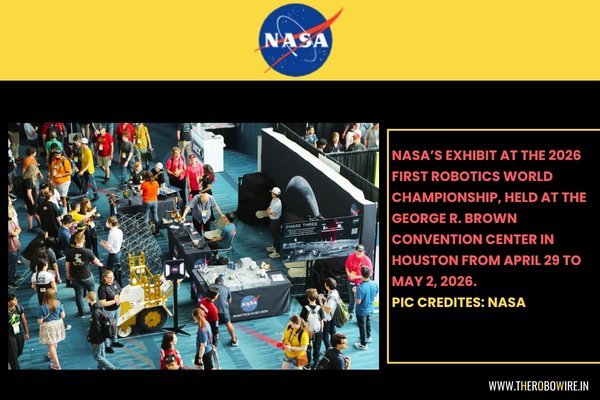
More than 1,000 student teams gathered in Houston for the competition, and NASA showed up in force. Over 51,000 students, parents, and mentors walked through interactive exhibits and sat down for real conversations about the future of space exploration.
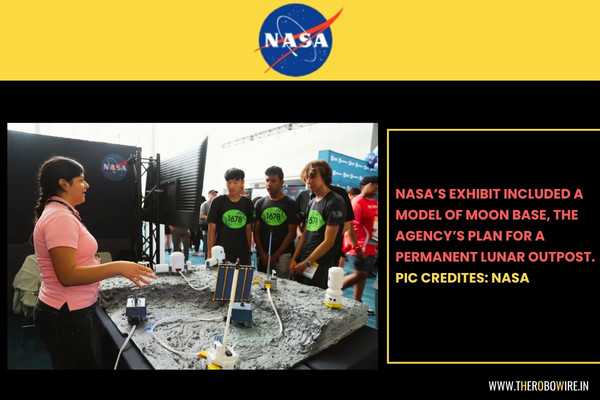
At the center of it all was a model of NASA’s Moon Base, a permanent lunar outpost designed to serve as a hub for exploration, science, and tech demos that will eventually pave the way for Mars and beyond.
Phase 1 of the Moon Base strategy is all about robots. Before astronauts return to the surface under Artemis, NASA is accelerating a string of robotic and uncrewed missions to scout, test, and prepare.
The plan calls for up to 30 robotic lunar landings by 2027 through the Commercial Lunar Payload Services (CLPS) program delivering rovers, hoppers, drones, and critical science payloads faster than ever before.
 The exhibit floor showcased some of the most exciting technologies leading the charge:
ARMADAS (Automated Reconfigurable Mission Adaptive Digital Assembly Systems) is a modular construction platform using small robots and smart algorithms to autonomously build large-scale infrastructure in space—solar arrays, communication systems, habitats. The payoff? Less reliance on launching fully assembled hardware from Earth, making deep space exploration far more sustainable.
CADRE (Cooperative Autonomous Distributed Robotic Exploration) brings together three small lunar rovers that explore as a team, gathering data no single robot could collect alone. If successful, this opens the door to coordinated multi-robot missions that can navigate dangerous terrain, support astronauts, and redefine how we approach lunar science.
Skyfall Mars Helicopters build on the legendary Ingenuity Mars Helicopter, which knocked out 72 historic flights in Jezero Crater. The next generation of aerial scouts will help scientists and mission planners map the Red Planet, clearing the path for human exploration.
NASA didn’t just show up with one voice but multiple centers brought their expertise to Houston. Johnson Space Center, Kennedy Space Center, Langley, Ames, Michoud, Armstrong, Glenn, Goddard, White Sands, and Wallops all contributed unique technologies and know-how, creating a comprehensive snapshot of the agency’s robotics capabilities.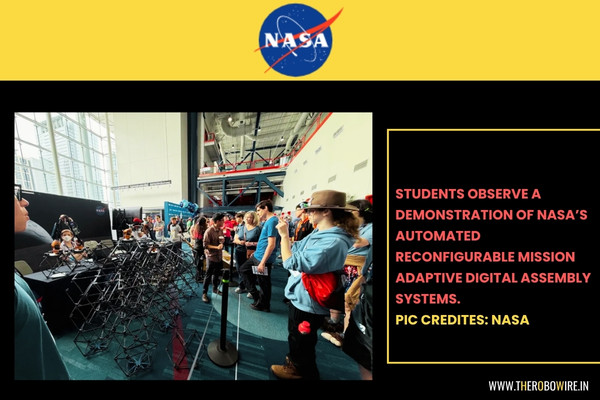
NASA’s relationship with FIRST Robotics runs deep. Since 1996, the agency has mentored teams across the country, and this year that support expanded significantly. NASA sponsored more than 160 FIRST Robotics Teams, with 50 receiving direct NASA mentorship.